The plans — which look more like a vision from the tech industry than craft brewing — were posted last week on the town of Munster’s website. Town officials have been hammering out details of the expansion with Three Floyds since September.I'm a big fan of Three Floyds, and have visited their brewpub a couple of times, which can fill up quickly. I can't wait to visit their shiny new facility!
Munster Town Manager Dustin Anderson said he expects formal approval by March. The new brewery would likely be completed in 2019 or 2020.
Three Floyds bought multiple lots around its brewery in 2014 to expand brewing production and build a distillery. The new plans calls for Three Floyds to continue building outward from its existing operation, including construction on an undeveloped lot north of the distillery and a lot south of the brewery that formerly housed another business.
“We’re thrilled,” Anderson said. “Three Floyds is a great neighbor and asset for the community, and we’re glad they’re choosing to expand in Munster.”
Thursday, February 15, 2018
So Does that Make it Nine Floyds?
Three Floyds Brewery in Munster, Indiana has plans to triple their current space, with a new glass-walled building that would feature a larger brewpub, outdoor seating, more parking, and of course, more space for brewing:
Labels:
beer
Wednesday, February 14, 2018
Statistical Sins: Not Making it Fun (A Thinly Veiled Excuse to Post a Bunch of XKCD Cartoons)
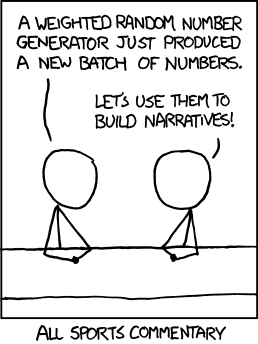
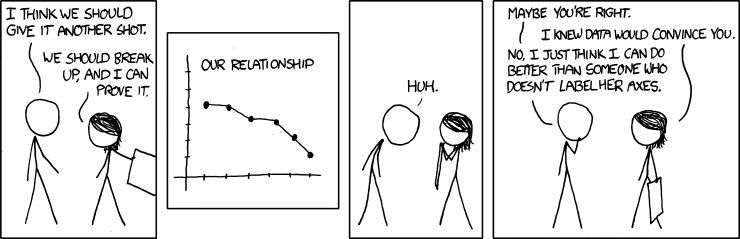
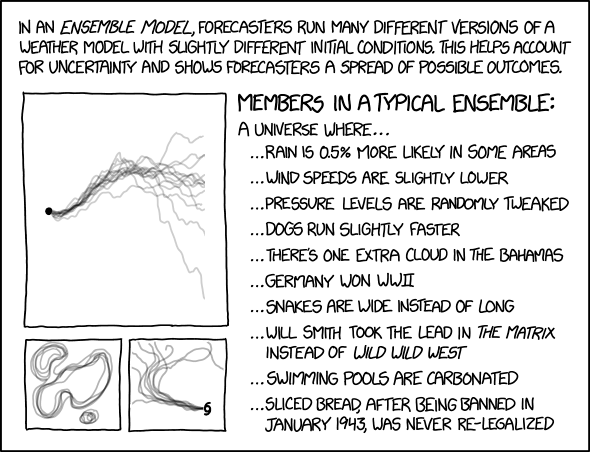
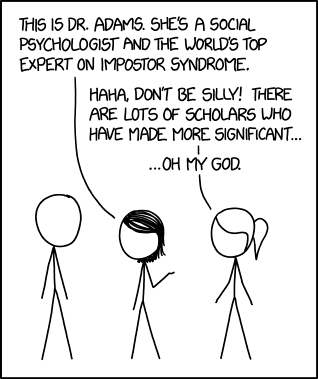
For today's post, I've decided to start pulling together XKCD cartoons corresponding to statistics/probability concepts. Why? Because there are some great ones that will liven up your presentation or lecture. Much like the Free Data Science and Statistics Resources post, this is going to be a living document.
Outliers
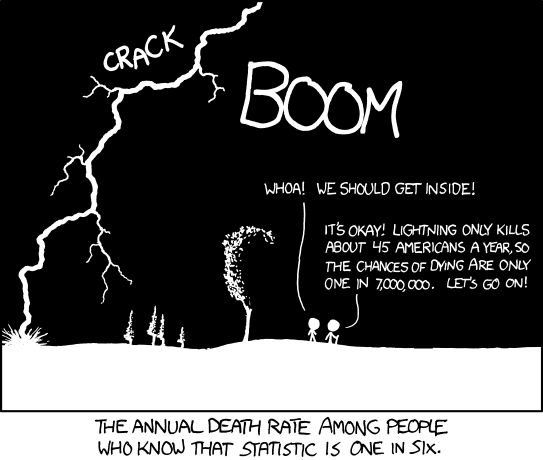
Probability
Hypothesis Testing
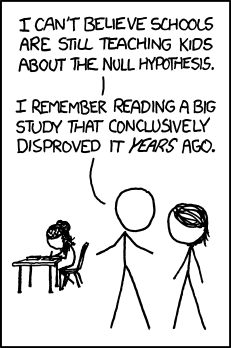
Null:
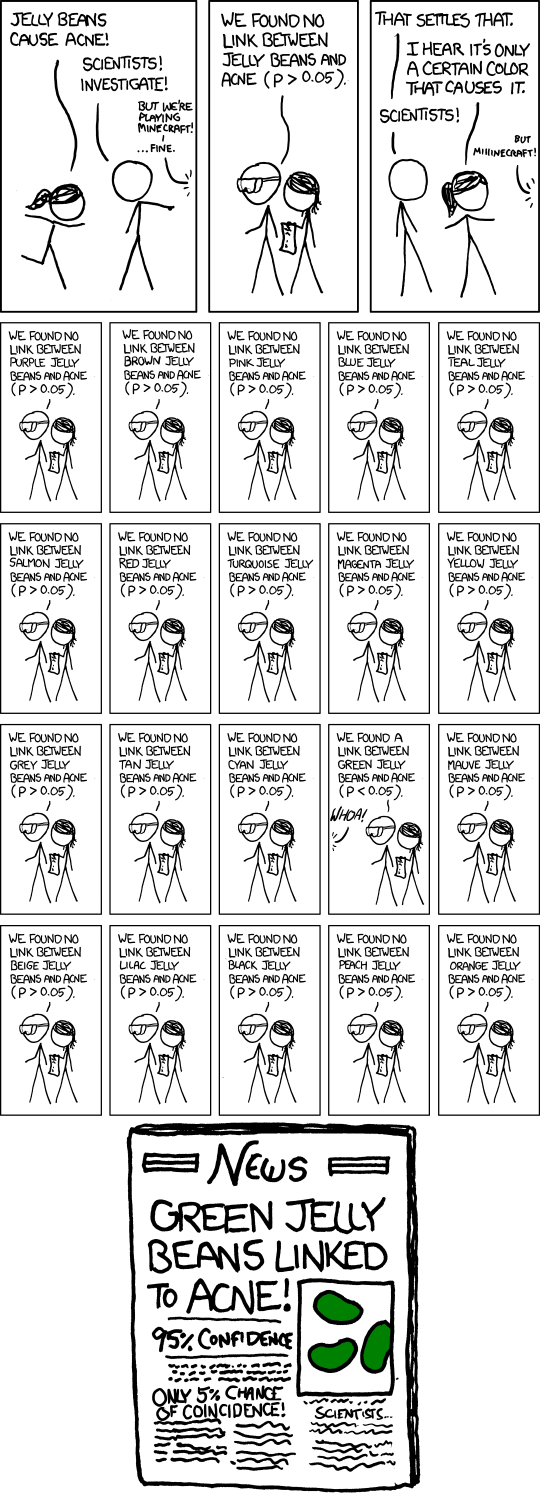
P-Hacking:
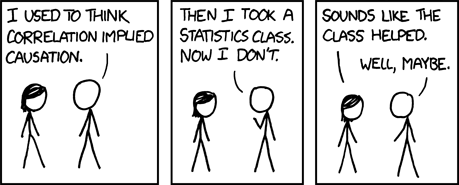
Correlation
Randomness
Visualizing Data
Other Concepts
Tuesday, February 13, 2018
A Work of Art
NASA just released some absolutely breathtaking images of Jupiter, taken by the Juno Spacecraft.
Obviously, the images have been processed to accentuate different elements. You can view the images sent back and do some editing of your own by visiting the JunoCam site. This last one reminds me of a particular work of art:
Snow Way
This story brought a few tears to my eyes - a Chicago man asked, via Twitter, for 10 volunteers to help clear snow for a predominantly elderly community. He got 120 volunteers:
Cole sent out a tweet Friday night asking for 10 volunteers to come to his neighborhood, Chatham, on the South Side of Chicago, to shovel the foot of snow that was accumulating. Chatham is a community that’s largely elderly and African American.
When he went to the train station Saturday morning to see whether anyone had showed up to help, he couldn’t believe what he saw. About 120 people stood on the platform, many with shovels, ready to work.
They came from all backgrounds and all parts of the city.
Cole said that he has been shoveling for his neighbors for years and that for the past several years, he has put out a call for volunteers. In the past, he has gotten about 20 helpers. He said he’s not sure what made so many people respond this year.
“It represents an enthusiasm this city hasn’t seen in a while,” he said.
Monday, February 12, 2018
Things I'm Loving Today
What am I loving today? Well..
- This comic from XKCD:
- Chris Stuckman's hilarious review of Fifty Shades Freed:
- And while we're at it, his spot on review of The Cloverfield Paradox (go watch on Netflix first if you want to see it):
- For comparison, you can also check out the review of The Cloverfield Paradox from my friend over at Is It Any Good?
- David Robinson of Variance Explained tells us how to win your office Super Bowl square.
- And finally, this sign I saw on my walk to work this morning:
Sunday, February 11, 2018
Statistics Sunday: My Favorite R Packages
Last year, I shared a post to help you get started with R and R Studio - check it out here. As I install R on yet another computer, it occurred to me that now might be a good time to blog about the R packages I use so often, installing them is usually my first step right after installing R and R Studio.
Whenever you install R, you'll get the base package, which has many built-in statistics, and some additional libraries. Libraries add functionality to R - you install and load a library to have access to its built-in functions. These libraries/packages are written and contributed by users - some by individuals, some organizations or universities, and some collaborations among users and/or organizations. If you navigate over to the Comprehensive R Archive Network (CRAN) website, you'll find that there are currently 12,133 packages available. There are R packages to do just about anything, and often more than one for any particular statistical approach.
You don't need all of them of course, and may not have any need for most of them. And the packages I use for my own work are likely to be very different from the ones you would need. But my goal for today is to show you the R packages that I think are either universally useful for statisticians, or are just so good, I have to share them with others.
- dplyr - Part of the "tidyverse" of R packages, this package offers a "grammar" of data manipulation, allowing you to easily filter and mutate (the term used for aggregating data or computing a new variable); this package works on data both in and out of memory, so you can even use it on datasets too large to store in your own computer's memory
- ggplot2 - Another member of the tidyverse, this one using the grammar of graphics (gg); similar syntax is used to create many different kinds of charts and figures, with just a few changes for type, making it much easier to learn and very flexible
- psych - Described by the creator, William Revelle of Northwestern University, as a "general purpose toolkit for personality, psychometric theory, and experimental psychology," this package is great for running quick descriptives, data reduction, and psychometric analysis (mostly classical test theory); it also has its own website, filled with resources for learning R
- lavaan - An easy-to-use package for conducting confirmatory factor analysis and structural equation modeling; I had the pleasure of attending a workshop with one of the developers of the package, Yves Rosseel, a couple of years ago
- semPlot - Is it possible for an R package to change your life? This package is brilliant; you create your measurement or structural equation model as an R object - to analyze with lavaan or whatever package you choose - then use this package to draw that model for you, with just a line or two of code, complete with factor or path loadings if you'd like. No more hunching over Powerpoint creating figures or accepting the messy drawings produced by SEM software.
- metafor and rmeta - Two R packages for meta-analysis, which I learned to use in a Meta-Analysis with R course I took a year or so ago. Personally I found the metafor package more useful, but both packages are installed on my computer and have different enough strengths that I could definitely justify installing both
- RPostgreSQL - Last year, I took a course on SQL, which, after teaching us some basics in PostgreSQL, showed us how to bring SQL data into R; if you, like me, know just enough SQL to be dangerous and prefer to use statistical software to analyze your data, this package will let you pull SQL data into R data frame to be analyzed with whatever package(s) you choose
You can install any of these libraries with install.packages("libraryname") and load a package for use with library("libraryname"). While it's completely fine to have multiple libraries loaded at once, remember that some libraries may use the same function name. R will give the most recently loaded library precedence when functions exist in more than one - and it will let you know when you've loaded a library what functions are now masked from the other loaded libraries.
I tend to measure my productivity by how many R packages I installed that day, so I'm always exploring and learning new approaches and installing new packages. Hopefully I'll do another post like this in the future where I blog about new packages I'm loving.
Sound off, readers - what are your favorite R packages?
Friday, February 9, 2018
Book Review: Sleeping Beauties
You may recall from my reading analysis post that Stephen King was one of the most popular authors among by Goodreads friends. Sleeping Beauties, which came out last year, is the newest book from Stephen King, which he cowrote with his son, Owen King. The book was well-reviewed, even winning the Goodreads award for best horror. I knew I was going to read it eventually, but I was concerned about how long it would take me to work my way through those 700 pages. Surprisingly, not long at all - I finished the book in about a week.
At the beginning of the book is a long list of characters, identifying who they are in relation to other characters. I started reading this but wanted to get started on the actual story, so I skipped on to the book. The character list really wasn't necessary at first, because at the beginning, characters are really in one of two places: a woman's prison and the nearby town of Dooling (a fictional town in the Appalachian region). Only one main character starts outside of Dooling, and the rest were all tied to their locations/roles, so it was quite easy to remember who characters were. As the events of the story moved along, and a new location was introduced, with people from the prison and Dooling, it was nice to have that list to refer back to as a reminder.
The story begins when a stranger comes to town - a half-naked woman who calls herself Eve - who proceeds to go Hulk on a couple of meth dealers, beating them to death. A third man gets away and Eve leaves the woman living with the meth dealers, Tiffany, unharmed. Eve is picked up by Lila, the town sheriff, and taken to the woman's prison, for temporary housing and so she can be evaluated by Lila's husband, Clint, a psychiatrist. In the meantime, the police arrive to take Tiffany's statement about what happened, and are shocked when Tiffany falls asleep and is suddenly wrapped in a white, cottony substance - a cocoon, much like the ones created by moths (which appear throughout the book in many symbolic ways).
Women around the world go to sleep and become wrapped in cocoons, falling to what is dubbed "Aurora syndrome" after the name given to Sleeping Beauty in the Disney movie. If anyone awakens a sleeping woman, she goes into a murderous rage, before falling back asleep. Lila and the other women of Dooling struggle to stay awake, but most fail - and are almost instantly wrapped in a cocoon. In the meantime, Eve, who seems to know something about what is going on with the cocooned women, is able to sleep and awake as normal. Dooling is at the center of whatever is causing women to sleep and cocoon all over the world. This is confirmed after the women who have fallen asleep awaken in another place - but we quickly see, it's only the women of Dooling who appear in this other place. The story then focuses on the mystery of Aurora and Eve.
As I said, the book is a surprisingly quick read for 700 pages. Though it is a detailed story, part of the reason for the length is the multiple subplots and characters. The idea for the story is Owen's, but the number of characters and subplots is pure Stephen. (This is why Stephen King books are often adapted into mini-series instead of movies, to retain as much of the story as possible. I could definitely foresee Sleeping Beauties adapted as a mini-series for Netflix.)
I very much enjoyed this book and would highly recommend it. Though Stephen King is well-known for being a horror writer, I personally wouldn't classify this book as horror - it's fantasy mystery/speculative fiction, with some elements of suspense (and a healthy dose of feminism). Nothing is really that scary, or even unsettling in the way some light horror can be. So if you're not a fan of horror, don't let the horror label scare you away from Sleeping Beauties. The book will make you think and laugh, but I highly doubt it will scare you, unless you have a phobia of moths. And if you are a fan of horror, you may not find it here, but what you will find is a very satisfying story.
Subscribe to:
Posts (Atom)