Last night, I went to a spectacular production of Pippin at the Cadillac Palace Theatre in Chicago. Pippin is the eldest son of Charlemagne - though these characters are based on real people, Charlemagne and Pepin, very little of the plot is historically accurate. The show begins, after introducing a troupe of players (Magic to Do), when Pippin has finished university and returned home to begin finding his place in the world (Corner of the Sky).
Pippin does not seem to have a clear idea of what he wants to do with his life, beyond that he is "extraordinary" and he wants to have a fulfilling life. He tries on various "selves" over the course of the show: warrior, courtesy of some sibling rivalry with his half-brother Lewis - his time as a warrior ends after a discussion with a headless corpse; lover, after a discussion with his grandmother; revolutionary and then King, after some coaxing by the Lead Player; artist (until the arts budget is cut); and religious man (where he was "touched" but not by an angel). For each, Pippin seems to drift along, trying on these different identities, but never fully committing to them - in fact, even selecting these identities is not always his idea. The only decision he seems to make on his own is to run away and try something new, all the while insisting that he is "extraordinary" - so how could he possibly lead a simple, ordinary life? When nothing seems to be working, Pippin's existential crisis leaves him in utter despair.
The show echoes some of the struggles we all go through, of determining our identity and role in the world (see a previous post about this topic). According to Erikson's stages of development, this stage occurs during adolescence, about ages 13-19. Presumably Pippin is older than this by a few years, but it's quite likely that this stage may extend a little later for people who attend university before selecting a career and life goal. The Lead Player operates as the little voice inside Pippin's head, telling him he is made for great things and should never settle. The Lead Player even attempts to sabotage Pippin's relationship with a woman describing herself as "ordinary." But Pippin seems to find some fulfillment and meaning when he meets someone who needs him, and this helps guide him to his destiny.
As I mentioned, the production was spectacular. The story took place inside a circus tent, with the players doing complicated acrobatics, dangling from hoops and trapeze, and, in one scene, balancing on four stacked metal tubes. Pippin's stepmother, Fastrada, had two costume changes in one scene that each took only a few seconds. The actors all had a great time, interacting with the audience and ad-libbing. The show breaks the fourth wall very often, especially in Act 2, so the interactions with the audience - such as Charlemagne playfully chiding the audience for applauding Fastrada ("Don't applaud; you'll only encourage her... And don't applaud that, either.") - fit well with the tone of the show.
In one scene, Lewis was supposed to leap through a hoop the Lead Player held over her head, and he just barely missed. Staying completely in the character, the Lead Player said - as the orchestra kept playing - "Nope, we're doing that one again." Lewis returned to his starting position, the orchestra transitioned back to that point in the music seamlessly, and Lewis made the leap flawlessly to thunderous applause. As the Lead Player continued on with the show, she briefly paused and said to the audience, "You're welcome."
Under the surface, though, Pippin deals with a much deeper, even somber theme, about finding fulfillment and leading a good life - regardless of whether it is extraordinary or not - as well as the danger of letting perfect be the enemy of good. The light-hearted tone of the rest of the show allows Pippin (and the audience) to get so caught up in the fun, we almost miss when the action takes a darker turn.
I wish all of you could see this show. Sadly, the production closes on Sunday. But if you have the opportunity between now and then - yes, I know, not a lot of time - definitely check it out!
~Sara
Friday, August 7, 2015


Wednesday, August 5, 2015
Inspiration, Dreams, and Why Social Psychology is Awesome
After finishing up my time on a non-profit board, my plan was to fill that extra time with things I enjoyed - including writing. Unfortunately, as is often the case with "extra" time, it quickly gets filled with tasks. So I resolve, once again, to try to spend more time writing, including writing on this blog.
Many writers have clashed on the issue of inspiration - whether one should write only when "inspired" to do so, or whether one should write regularly as a practice, whether you feel like doing so or not. Ray Bradbury, one of my favorite authors, had a lot of advice for aspiring writers, much of which involved writing often, regardless of "inspiration." Isaac Asimov also wrote every day, and was very prolific as a result.
I know I should apply this logic to myself and basically make myself write regularly. But as I was pondering this issue of inspiration, I started thinking about when and where I get some of my best ideas. For me - and this is especially true of fiction ideas - I tend to be most creative at night, especially after I've woken up from a strange and inspiring dream. I'd say dreams are the source of some of my best ideas. (P.S., I've blogged before about head songs that I think come from dreams, in part.)
I started doing a little research into this and found a whole literature on dreams and creativity. For instance, dreams inspired Paul McCartney's "Yesterday" and Mary Shelley's "Frankenstein." Because of sleep's role in memory consolidation, it makes sense that sleep can have a positive impact on certain aspects of creativity, such as insight.
REM (dream) sleep specifically is associated with increased abstract reasoning as well as increasing the strength of normally weak associations in the brain (see here). What that means is, two different things that your waking brain might not even see a connection between could become associated rather easily in a dream. Our brain does this kind of linking (neural networking) naturally, and it's a great way to learn new things - by connecting new knowledge you need to memorize to something you already know. Just as you can connect any actor to Kevin Bacon, you can connect any concept in your brain to another. Some connections are more direct than others.
Apparently one thing your brain does during REM sleep is play six degrees of "showing up to work without your pants." Or some such.
Of course, Freud and other psychoanalytic theorists would state that these strange juxtapositions are simply your subconscious trying to work out any conflicts you're having in your life. In fact, pretty much everything goes back to this idea of the subconscious, at least for psychoanalysts.
According to these theories, within your mind are three forces vying for control: the id, which operates on the pleasure principle (i.e., that feels good, keep doing it; that feels bad, stop doing it); the superego, which operates on morality (i.e., that feels good, stop doing it; that feels bad, keep doing it); and the ego, the conscious self who is just trying to pick the right feel goods to keep doing or stop doing and the right feel bads to keep doing or stop doing.
When you dream, according to these theories, there are two types of content: manifest content, which is the literal subject of the dream (e.g., showing up to work without your pants), and latent content, which is the underlying meaning of the dream (e.g., you have issues with your mother, or maybe you like exhibitionism - I don't know, I'm a social psychologist!).
Of course, the interesting thing about all this theory is that social psychologists have come up with a variety of hypotheses and theories that explain many aspects of psychoanalytic theory. Putting some kind of idea in your head below your awareness that influences behavior? Priming. Attitudes that you swear you do not hold but that guide decisions, such as whether to trust someone of a certain group? Implicit attitudes. And of course, underlying meaning in your life and nonconscious sources of influence based on past experiences, temperament, and so on? Self and identity.
See also media effects, mob mentality, and ingroup/outgroup effects, just to name a few forces that influence you without you even realizing it. (Note: social psychologists prefer the term 'nonconscious,' rather than the psychoanalyst-laden term 'subconscious.')
Why do we need these little snippets of theory and hypothesis if Freud's and other psychoanalysts' theories can sum much of this up, in a neat, Oedipus-complex-themed package? After all, parsimony is an important aspect of science - the simplest explanation tends to be the best one, in the absence of evidence to support one over the other.
But that's the thing - the various social psychological theories outlined above have just that: evidence. Specifically empirical evidence, which is pretty important for science, something I've also blogged about before. In fact, psychoanalytic theories lack the basic ingredients that make them at all scientific: the ability to test these concepts (we call this 'testability') and, if they are false, demonstrate that (we call this 'falsifiability'). If there really are subconscious forces operating in your brain, trying to give you glimpses of what's really bothering you (latent content) but hiding behind symbolism (manifest content), how would we even begin to test this? After all, they're subconscious. But for social psychological theories, such as priming, we may know what evidence we would observe if priming happened and what we would observe if it isn't happening.
One of the key differences is whether the hypothesis/theory is nomothetic (describes a general pattern) or idiographic (describes a specific pattern, usually within a particular person). There are ways to test idiographic hypotheses, but it is more difficult than if you can generate a hypothesis that should apply to a group of people receiving the same intervention. You would just test to see if the group of people responded the way you expected.
These various social psychological theories lack a couple of things - 1) there isn't a unified theory that sums all this up in a neat little package and 2) other than the various findings outlined above in regard to sleep/dreams, there isn't really a good hypothesis/theory for the purpose of dreams. What you read above is descriptive with regard to sleep and dreams, but not predictive; that is, we haven't identified some key cause that would allow us to understand why we dream what we do and perhaps predict what people will dream, based on knowledge of the important variables. We don't even know what those variables are.
As I mentioned in my previous post linked above, scientific findings are tentative, pending better evidence and methodology. We may not completely understand dreams now, but perhaps will be able to in the future, as we expand on technology for studying the living, working brain.
For the time being, though, I'll be happy to take whatever inspiration my dreaming brain sends my way. But please, no more going back to high school dreams.
Dreamily yours,
~Sara
Many writers have clashed on the issue of inspiration - whether one should write only when "inspired" to do so, or whether one should write regularly as a practice, whether you feel like doing so or not. Ray Bradbury, one of my favorite authors, had a lot of advice for aspiring writers, much of which involved writing often, regardless of "inspiration." Isaac Asimov also wrote every day, and was very prolific as a result.
I know I should apply this logic to myself and basically make myself write regularly. But as I was pondering this issue of inspiration, I started thinking about when and where I get some of my best ideas. For me - and this is especially true of fiction ideas - I tend to be most creative at night, especially after I've woken up from a strange and inspiring dream. I'd say dreams are the source of some of my best ideas. (P.S., I've blogged before about head songs that I think come from dreams, in part.)
I started doing a little research into this and found a whole literature on dreams and creativity. For instance, dreams inspired Paul McCartney's "Yesterday" and Mary Shelley's "Frankenstein." Because of sleep's role in memory consolidation, it makes sense that sleep can have a positive impact on certain aspects of creativity, such as insight.
REM (dream) sleep specifically is associated with increased abstract reasoning as well as increasing the strength of normally weak associations in the brain (see here). What that means is, two different things that your waking brain might not even see a connection between could become associated rather easily in a dream. Our brain does this kind of linking (neural networking) naturally, and it's a great way to learn new things - by connecting new knowledge you need to memorize to something you already know. Just as you can connect any actor to Kevin Bacon, you can connect any concept in your brain to another. Some connections are more direct than others.
Apparently one thing your brain does during REM sleep is play six degrees of "showing up to work without your pants." Or some such.
Of course, Freud and other psychoanalytic theorists would state that these strange juxtapositions are simply your subconscious trying to work out any conflicts you're having in your life. In fact, pretty much everything goes back to this idea of the subconscious, at least for psychoanalysts.
According to these theories, within your mind are three forces vying for control: the id, which operates on the pleasure principle (i.e., that feels good, keep doing it; that feels bad, stop doing it); the superego, which operates on morality (i.e., that feels good, stop doing it; that feels bad, keep doing it); and the ego, the conscious self who is just trying to pick the right feel goods to keep doing or stop doing and the right feel bads to keep doing or stop doing.
 |
| In case you would prefer a visual representation of the id, ego, and superego (respectively); Homer's id is clearly winning |
Of course, the interesting thing about all this theory is that social psychologists have come up with a variety of hypotheses and theories that explain many aspects of psychoanalytic theory. Putting some kind of idea in your head below your awareness that influences behavior? Priming. Attitudes that you swear you do not hold but that guide decisions, such as whether to trust someone of a certain group? Implicit attitudes. And of course, underlying meaning in your life and nonconscious sources of influence based on past experiences, temperament, and so on? Self and identity.
See also media effects, mob mentality, and ingroup/outgroup effects, just to name a few forces that influence you without you even realizing it. (Note: social psychologists prefer the term 'nonconscious,' rather than the psychoanalyst-laden term 'subconscious.')
Why do we need these little snippets of theory and hypothesis if Freud's and other psychoanalysts' theories can sum much of this up, in a neat, Oedipus-complex-themed package? After all, parsimony is an important aspect of science - the simplest explanation tends to be the best one, in the absence of evidence to support one over the other.
But that's the thing - the various social psychological theories outlined above have just that: evidence. Specifically empirical evidence, which is pretty important for science, something I've also blogged about before. In fact, psychoanalytic theories lack the basic ingredients that make them at all scientific: the ability to test these concepts (we call this 'testability') and, if they are false, demonstrate that (we call this 'falsifiability'). If there really are subconscious forces operating in your brain, trying to give you glimpses of what's really bothering you (latent content) but hiding behind symbolism (manifest content), how would we even begin to test this? After all, they're subconscious. But for social psychological theories, such as priming, we may know what evidence we would observe if priming happened and what we would observe if it isn't happening.
One of the key differences is whether the hypothesis/theory is nomothetic (describes a general pattern) or idiographic (describes a specific pattern, usually within a particular person). There are ways to test idiographic hypotheses, but it is more difficult than if you can generate a hypothesis that should apply to a group of people receiving the same intervention. You would just test to see if the group of people responded the way you expected.
These various social psychological theories lack a couple of things - 1) there isn't a unified theory that sums all this up in a neat little package and 2) other than the various findings outlined above in regard to sleep/dreams, there isn't really a good hypothesis/theory for the purpose of dreams. What you read above is descriptive with regard to sleep and dreams, but not predictive; that is, we haven't identified some key cause that would allow us to understand why we dream what we do and perhaps predict what people will dream, based on knowledge of the important variables. We don't even know what those variables are.
As I mentioned in my previous post linked above, scientific findings are tentative, pending better evidence and methodology. We may not completely understand dreams now, but perhaps will be able to in the future, as we expand on technology for studying the living, working brain.
For the time being, though, I'll be happy to take whatever inspiration my dreaming brain sends my way. But please, no more going back to high school dreams.
Dreamily yours,
~Sara
Wednesday, July 29, 2015
On Caitlyn Jenner, Gender, and Belonging
Bruce Jenner recently underwent surgery and treatment to transition to being a woman, now going by the name Caitlyn.

Numerous people have responded, some positive, some negative. I have mostly stayed out of these discussions, but a few recent posts making their way around Facebook have made it difficult for me to keep quiet about my views on this issue.
Two posts, in particular, sparked a strong negative reaction from me - so strong, in fact, that I had to close my laptop and walk away. I do not want to give these posts any more attention than they've already received, so instead of linking to them, I'll summarize.
One was written by a woman who had breast cancer. While I certainly empathize with how difficult that must have been, she used this story as a way to define womanhood - traits, she insists, she has and Caitlyn Jenner does not. She describes being a single mom - once again, something I can imagine wasn't easy. She also repeatedly and incorrectly used the term female.
We briefly interrupt this blog post for a public service announcement: female is an adjective, woman is a noun. We now return to your regularly scheduled blog post.
She signs her post, which was addressed directly to Caitlyn, "a real woman." I hope you're rolling your eyes as much as I was (and still am).
The second was even more infuriating. She goes so far as to call Caitlyn's statement that she "identifies as a woman" offensive. She proceeds to list out all of the factors that make a woman a woman, including many references to getting married and having multiple children - dealing with morning sickness and other unpleasant symptoms during pregnancy and in one case, giving birth to a 10 lb baby without drugs.
I have to admit, I laughed out loud when she said Caitlyn's statement was offensive. This woman is too busy distributing woman cards (to those she deems worthy) and giving herself a big pat on the back to even notice how her narrow definition of womanhood is biased by her own experience and values. Let alone how much her statement excludes others.
Let's dissect Caitlyn's statements that had Real Woman and World's Greatest Mom (and these two will now be referred to as RW and WGM, respectively) so offended. Caitlyn says, "I identify as a woman." There is nothing in that statement that excludes others. As with a recent post I read examining the "Black Lives Matter" movement, there is an implicit "too" in this statement. Caitlyn isn't calling into question who else gets to call herself a woman. She isn't outlining the basic prerequisites for someone to call herself a woman. The statement is, essentially, "I identify as a woman too."
Caitlyn asks that we address her as "her," not "him." Again, nothing in that statement excludes other women. Regardless of how you feel about gender reassignment, the least we can do is call people what they want to be called, right?
Caitlyn's statements are about acceptance and belonging. RW's and WGM's statements are about bashing and excluding.
Part of the venom behind these attacks on Caitlyn, who simply wants to be recognized as part of a group with which she identifies, is likely a misunderstanding of the difference between (biological) sex and gender.
Sex is at the chromosomal level, which results in the development of internal sex organs. While the so-called sex hormones are typically associated with men (testosterone) or women (progesterone and estrogen), both sexes possess these hormones, at differing levels.
Yes, there are physical aspects associated with womanhood, though many of those aspects vary a great deal from person to person. Breasts, for example: not all women have large or even noticeable breasts, and men can also grow breasts for a variety of reasons. In fact, although rare, men can also get breast cancer. Having, and losing, breasts does not a woman make.
Gender, on the other hand, is a social term, referring to the concepts of masculinity and femininity in society. By interacting with others, we learn behaviors and traits associated with being a man or woman. Not only is womanhood socially constructed, it is also culturally influenced. The idea of what is a "woman" in Western cultures differs markedly from the idea in Eastern cultures.
And the differences can become even more nuanced and further subdivided by looking at smaller and smaller populations and groups. In fact, the posts by RW and WGM - while there are references to biological notions of womanhood, such as pregnancy - are strongly biased toward social (behavioral) notions of womanhood.
And even the ability to become pregnant shouldn’t define womanhood.
Does being incapable of getting pregnant mean you aren't a woman? Does consciously choosing not to have children mean you aren't a woman? What happens then to women who go through menopause and are no longer able to get pregnant - do they stop being women? As a (thus far) childless woman (and a friend of many childless women), I find that far more offensive than RW and WGM should find Caitlyn's statements. While I would like children someday, I recognize that for many women, this isn't that important to them.
And it doesn't have to be. In fact, insisting that pregnancy be a component in the definition of woman is simply dialing back the clock to a time when the only contribution a woman could make to our society was reproducing. When her worth was determined by her ability to bear healthy (and in some cases, emphasis on male) children. A time countless women and men have worked hard to move away from.
If RW and WGM had simply written posts about being women and the traits and characteristics that make them feel like women, that would have been fine. It's fine to be proud that you've given birth to three beautiful children and that you aspire to be a great mom. It's fine to be proud that you didn't let breast cancer beat you. Or that you raised a child on your own. I think most women would happily gather around and listen to other women's stories of strength.
But why must these declarations of pride take a backseat to excluding someone you don't want at the woman table? Being a woman is hard. We should find our strength through each other. Not by knocking others down.
~Sincerely,
A Fellow Woman
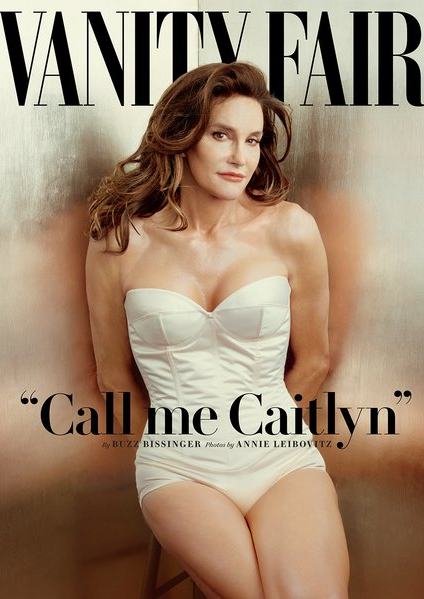
Numerous people have responded, some positive, some negative. I have mostly stayed out of these discussions, but a few recent posts making their way around Facebook have made it difficult for me to keep quiet about my views on this issue.
Two posts, in particular, sparked a strong negative reaction from me - so strong, in fact, that I had to close my laptop and walk away. I do not want to give these posts any more attention than they've already received, so instead of linking to them, I'll summarize.
One was written by a woman who had breast cancer. While I certainly empathize with how difficult that must have been, she used this story as a way to define womanhood - traits, she insists, she has and Caitlyn Jenner does not. She describes being a single mom - once again, something I can imagine wasn't easy. She also repeatedly and incorrectly used the term female.
We briefly interrupt this blog post for a public service announcement: female is an adjective, woman is a noun. We now return to your regularly scheduled blog post.
She signs her post, which was addressed directly to Caitlyn, "a real woman." I hope you're rolling your eyes as much as I was (and still am).
The second was even more infuriating. She goes so far as to call Caitlyn's statement that she "identifies as a woman" offensive. She proceeds to list out all of the factors that make a woman a woman, including many references to getting married and having multiple children - dealing with morning sickness and other unpleasant symptoms during pregnancy and in one case, giving birth to a 10 lb baby without drugs.
I have to admit, I laughed out loud when she said Caitlyn's statement was offensive. This woman is too busy distributing woman cards (to those she deems worthy) and giving herself a big pat on the back to even notice how her narrow definition of womanhood is biased by her own experience and values. Let alone how much her statement excludes others.
Let's dissect Caitlyn's statements that had Real Woman and World's Greatest Mom (and these two will now be referred to as RW and WGM, respectively) so offended. Caitlyn says, "I identify as a woman." There is nothing in that statement that excludes others. As with a recent post I read examining the "Black Lives Matter" movement, there is an implicit "too" in this statement. Caitlyn isn't calling into question who else gets to call herself a woman. She isn't outlining the basic prerequisites for someone to call herself a woman. The statement is, essentially, "I identify as a woman too."
Caitlyn asks that we address her as "her," not "him." Again, nothing in that statement excludes other women. Regardless of how you feel about gender reassignment, the least we can do is call people what they want to be called, right?
Caitlyn's statements are about acceptance and belonging. RW's and WGM's statements are about bashing and excluding.
Part of the venom behind these attacks on Caitlyn, who simply wants to be recognized as part of a group with which she identifies, is likely a misunderstanding of the difference between (biological) sex and gender.
Sex is at the chromosomal level, which results in the development of internal sex organs. While the so-called sex hormones are typically associated with men (testosterone) or women (progesterone and estrogen), both sexes possess these hormones, at differing levels.
Yes, there are physical aspects associated with womanhood, though many of those aspects vary a great deal from person to person. Breasts, for example: not all women have large or even noticeable breasts, and men can also grow breasts for a variety of reasons. In fact, although rare, men can also get breast cancer. Having, and losing, breasts does not a woman make.
Gender, on the other hand, is a social term, referring to the concepts of masculinity and femininity in society. By interacting with others, we learn behaviors and traits associated with being a man or woman. Not only is womanhood socially constructed, it is also culturally influenced. The idea of what is a "woman" in Western cultures differs markedly from the idea in Eastern cultures.
And the differences can become even more nuanced and further subdivided by looking at smaller and smaller populations and groups. In fact, the posts by RW and WGM - while there are references to biological notions of womanhood, such as pregnancy - are strongly biased toward social (behavioral) notions of womanhood.
And even the ability to become pregnant shouldn’t define womanhood.
Does being incapable of getting pregnant mean you aren't a woman? Does consciously choosing not to have children mean you aren't a woman? What happens then to women who go through menopause and are no longer able to get pregnant - do they stop being women? As a (thus far) childless woman (and a friend of many childless women), I find that far more offensive than RW and WGM should find Caitlyn's statements. While I would like children someday, I recognize that for many women, this isn't that important to them.
And it doesn't have to be. In fact, insisting that pregnancy be a component in the definition of woman is simply dialing back the clock to a time when the only contribution a woman could make to our society was reproducing. When her worth was determined by her ability to bear healthy (and in some cases, emphasis on male) children. A time countless women and men have worked hard to move away from.
If RW and WGM had simply written posts about being women and the traits and characteristics that make them feel like women, that would have been fine. It's fine to be proud that you've given birth to three beautiful children and that you aspire to be a great mom. It's fine to be proud that you didn't let breast cancer beat you. Or that you raised a child on your own. I think most women would happily gather around and listen to other women's stories of strength.
But why must these declarations of pride take a backseat to excluding someone you don't want at the woman table? Being a woman is hard. We should find our strength through each other. Not by knocking others down.
~Sincerely,
A Fellow Woman
Sunday, July 12, 2015
My 26 Book Reading Challenge or How to Put Way Too Much Thought into Your Reading List (Without Really Trying)
As I mentioned in a previous blog post, I'm doing a 26-book reading challenge this year. Here's the information about the challenge; I don't usually enjoy cutesy, scavenger-hunt-esque challenges, but I love reading, and this one was actually kind of fun.
Though it's only a little more than halfway through the year, I have my 26 books (almost completely) figured out. The order presented below is the original challenge order; I decided I didn't have to follow that order and had one of my own. Here's the list with a little commentary:
Own but Haven't Read:
 Picked For its Cover:
I was killing time in a book store (one of my favorite activities) while waiting to meet up with a friend, when I checked out the "our staff loves" section. The name of the book was fascinating, and after reading the blurb, I was excited to read it. In fact, funny coincidence - the friend I met up with had read (and enjoyed) the book, which led to another recommendation also included in my challenge.
 From the Library:
Though it's only a little more than halfway through the year, I have my 26 books (almost completely) figured out. The order presented below is the original challenge order; I decided I didn't have to follow that order and had one of my own. Here's the list with a little commentary:
Own but Haven't Read:
Deeply Odd by Dean Koontz
Status: Read
I've mentioned the Odd Thomas books before. I'm generally not a Dean Koontz fan, but stumbled upon Odd during a Netflix binge, when I watched a movie adaptation of what turned out to be the first book in this series. I liked the character Odd so much that I looked into whether more movies were made/being made, and found out it was a book series. The later books in the series weren't really as good as the first few, but still enjoyable. I think when I got to that point, I mostly wanted to see how it ended, and I was, for the most part, pleased with the ending.
Made Into a Movie:
Needful Things by Stephen King
Status: Read
I read a lot of Stephen King as a child/teenager, in part because of my lifelong love of horror movies. It had been a while since I picked up one of his books, but started up again recently with The Dark Tower series, 'salem's Lot, and The Stand. The thing I love about King is that his stories are always very detailed with lots of interesting subplots. My complaint is, well, his stories are always very detailed with lots of interesting subplots. They can be exhausting to pick up, because you can already see the length (due to the book's size) and know that, though the basic story will be relatively simple, the path takes many interesting twists and turns. Once I start reading, I get pulled in right away. This was especially the case for the next book on the list.

Finders Keepers by Stephen King
Status: Read
I actually had this one on my to-read list already, because it is the sequel to Mr. Mercedes. I had forgotten when it came out though, but was out shopping and noticed the cover, recognizing its similarity to the first book in the series (and knowing right away, without having to read the blurb, that I wanted to read it). So I'm kind of fudging the "picked for its cover"-ness, but hey, I think it counts.
I actually had this one on my to-read list already, because it is the sequel to Mr. Mercedes. I had forgotten when it came out though, but was out shopping and noticed the cover, recognizing its similarity to the first book in the series (and knowing right away, without having to read the blurb, that I wanted to read it). So I'm kind of fudging the "picked for its cover"-ness, but hey, I think it counts.
Friend Loves:
(tentatively) Lord of the Rings by J.R.R. Tolkien
Status: To-Read
I'll be honest: I'm a little unsure of whether I want to tackle this one. If you think a Stephen King book looks dauntingly long, take a look at this book; you can do some damage with even a softcover edition. But I love the movies, and feel like a hypocrite for never having reading the book. I have it on my list because I have quite a few friends who love it, but probably an equal number who hate it. If any friend has another recommendation, I'd definitely entertain it.
I'll be honest: I'm a little unsure of whether I want to tackle this one. If you think a Stephen King book looks dauntingly long, take a look at this book; you can do some damage with even a softcover edition. But I love the movies, and feel like a hypocrite for never having reading the book. I have it on my list because I have quite a few friends who love it, but probably an equal number who hate it. If any friend has another recommendation, I'd definitely entertain it.
Published This Year:
Go Set a Watchman by Harper Lee
Status: To-Read
I loved To Kill a Mockingbird, and was thrilled to discover a "sequel" (actually written before, though) was being published. I've heard mixed things, through friends and by reading reviews, but this is a book I want to experience for myself regardless.
I loved To Kill a Mockingbird, and was thrilled to discover a "sequel" (actually written before, though) was being published. I've heard mixed things, through friends and by reading reviews, but this is a book I want to experience for myself regardless.
Author You've Never Read Before:
The Windup Girl by Paolo Bacigalupi
Status: Read
I was killing time in a book store (one of my favorite activities) while waiting to meet up with a friend, when I checked out the "our staff loves" section. The name of the book was fascinating, and after reading the blurb, I was excited to read it. In fact, funny coincidence - the friend I met up with had read (and enjoyed) the book, which led to another recommendation also included in my challenge.
Author You Love:
Doctor Sleep by Stephen King
Status: Read
I know I have a lot of Stephen King on this list. As I said, I hadn't been reading as much of his stuff until a few years ago. This book is a sequel to King's The Shining, a story even most non-King fans would know. It takes place many years after the events in The Shining, focusing on Danny Torrance, the little boy who could shine.
I know I have a lot of Stephen King on this list. As I said, I hadn't been reading as much of his stuff until a few years ago. This book is a sequel to King's The Shining, a story even most non-King fans would know. It takes place many years after the events in The Shining, focusing on Danny Torrance, the little boy who could shine.
Bottom of "To Read" Pile:
Abraham Lincoln: Vampire Hunter by Seth Grahame Smith
Status: Read
I picked this book up when it was new based solely on the title, then kept pushing it back for one reason or another. This challenge was the perfect opportunity to make myself sit down and read it. It was very good. Obviously, don't go looking for much of a history lesson, but if you enjoy revisionist history as much as me, you'll like it.
I picked this book up when it was new based solely on the title, then kept pushing it back for one reason or another. This challenge was the perfect opportunity to make myself sit down and read it. It was very good. Obviously, don't go looking for much of a history lesson, but if you enjoy revisionist history as much as me, you'll like it.
Color in the Title:
The Silver Linings Playbook by Matthew Quick
Status: To-Read
I loved the movie. Once again, I feel like I should visit the source material. However, this is another one I'm on the fence about at the moment. I'm worried that some of the characters, who were already pretty intense in the movie, will be even more intense when we can get inside their minds. Anyone have a recommendation with a color in the title? (WARNING: I have absolutely no interest in reading Fifty Shades of Grey. None.)
I loved the movie. Once again, I feel like I should visit the source material. However, this is another one I'm on the fence about at the moment. I'm worried that some of the characters, who were already pretty intense in the movie, will be even more intense when we can get inside their minds. Anyone have a recommendation with a color in the title? (WARNING: I have absolutely no interest in reading Fifty Shades of Grey. None.)
Set Somewhere You Want to Visit:
The Ring by Koji Suzuki
Status: Read
This one could have also been "bottom of the 'to read' pile," since I owned it for a very long time (and in fact moved it twice) before reading it. This book is the basis for the well-known horror movies, Ringu (Japanese version) and The Ring (American version). However, the movies differ markedly from the book. I wondered if reading about the events would be as scary as watching, but the cool thing about the book is that it could share things that weren't easily shared through the movies - that watching the video was a full-body experience, including physical and emotional sensations that would be hard to depict on screen. This book is the first in a series of four books - I plan on reading the rest at some point.
This one could have also been "bottom of the 'to read' pile," since I owned it for a very long time (and in fact moved it twice) before reading it. This book is the basis for the well-known horror movies, Ringu (Japanese version) and The Ring (American version). However, the movies differ markedly from the book. I wondered if reading about the events would be as scary as watching, but the cool thing about the book is that it could share things that weren't easily shared through the movies - that watching the video was a full-body experience, including physical and emotional sensations that would be hard to depict on screen. This book is the first in a series of four books - I plan on reading the rest at some point.
Started but Never Finished:
Pygmy by Chuck Palahniuk
Status: To-Read
This book is similar to A Clockwork Orange by Anthony Burgess, in that the story, told by the main character, uses unfamiliar slang. The reader has to catch on as best as s/he can while reading. This is challenging at first, but very rewarding in the long run. However, I couldn't stick with Pygmy long enough to understand his speech. Time to revisit and (hopefully) finish!
This book is similar to A Clockwork Orange by Anthony Burgess, in that the story, told by the main character, uses unfamiliar slang. The reader has to catch on as best as s/he can while reading. This is challenging at first, but very rewarding in the long run. However, I couldn't stick with Pygmy long enough to understand his speech. Time to revisit and (hopefully) finish!
Lion, Witch, or Wardrobe:
The Magician's Land by Lev Grossman
Status: Read
The point of this part of the challenge is not to read The Chronicles of Narnia, but to read any book that involves a lion, a witch, or a wardrobe. I selected the third book in a series that is kind of an adult version of The Chronicles... or Harry Potter... series.
The point of this part of the challenge is not to read The Chronicles of Narnia, but to read any book that involves a lion, a witch, or a wardrobe. I selected the third book in a series that is kind of an adult version of The Chronicles... or Harry Potter... series.
Female Heroine:
Doomed by Chuck Palahniuk
Status: Read
This book is also a sequel to Damned, which is a little like The Breakfast Club if it were set in Hell. No, really. Funny, provocative, and just a little crazy - this is why Chuck is one of my favorite authors.
This book is also a sequel to Damned, which is a little like The Breakfast Club if it were set in Hell. No, really. Funny, provocative, and just a little crazy - this is why Chuck is one of my favorite authors.
Set in the Summer:
Dandelion Wine by Ray Bradbury
Status: Read
I adore Ray Bradbury, and have been told by many: "This book changed my life." I'll admit, I had some trouble getting into it. It's similar to The Martian Chronicles, in that it's more of a series of short stories with common themes, characters, and situations. I wasn't pulled in as much as I was for The Martian Chronicles, however; but I did enjoy it as I got farther along.
I adore Ray Bradbury, and have been told by many: "This book changed my life." I'll admit, I had some trouble getting into it. It's similar to The Martian Chronicles, in that it's more of a series of short stories with common themes, characters, and situations. I wasn't pulled in as much as I was for The Martian Chronicles, however; but I did enjoy it as I got farther along.
Poetry:
Everytime a Knot is Undone, a God is Released by Barbara Chase-Riboud
Status: To-Read
I'm not a big poetry reader, and beyond some of the classics, could not name very many poets. I picked this book based on the title.
I'm not a big poetry reader, and beyond some of the classics, could not name very many poets. I picked this book based on the title.
Learned about Because of This Challenge:
The Girl on the Train by Paula Hawkins
Status: Read
I was spending a lot more time on Goodreads because of this challenge, and this book popped up as one I would like. I probably would have discovered it otherwise, because a lot of my friends read/plan to read it. I'm also a big fan of mysteries, and this is a good one. It's been compared to Gone Girl, but I think this book is better.
I was spending a lot more time on Goodreads because of this challenge, and this book popped up as one I would like. I probably would have discovered it otherwise, because a lot of my friends read/plan to read it. I'm also a big fan of mysteries, and this is a good one. It's been compared to Gone Girl, but I think this book is better.
Will Make You Smarter:
Police Interrogation and American Justice by Richard A. Leo
Status: To-Read
I cited the work of Leo many times when teaching Psychology and Law. His work deals with ways in which police follow the letter of the law but not the "spirit" of the law, for things like Miranda rights. He makes some fascinating points, both psychologically (in terms of how small things can make a suspect waive rights for an attorney, to remain silent, etc.) and ethically (that these practices violate the purpose of these policies). I'm looking forward to reading more of his thought of this topic, even though I don't really work in this subfield anymore.
I cited the work of Leo many times when teaching Psychology and Law. His work deals with ways in which police follow the letter of the law but not the "spirit" of the law, for things like Miranda rights. He makes some fascinating points, both psychologically (in terms of how small things can make a suspect waive rights for an attorney, to remain silent, etc.) and ethically (that these practices violate the purpose of these policies). I'm looking forward to reading more of his thought of this topic, even though I don't really work in this subfield anymore.
Blue Cover:
Strangers on a Train by Patricia Highsmith
Status: To-Read
I'm familiar with many of Patricia Highsmith's books because of various movie adaptations (and if you look her up, you'll realize you are too) but have never actually read one of them. I definitely wanted to include one of hers on this list and I decided to start with one of her most well known.
I'm familiar with many of Patricia Highsmith's books because of various movie adaptations (and if you look her up, you'll realize you are too) but have never actually read one of them. I definitely wanted to include one of hers on this list and I decided to start with one of her most well known.
Supposed to Read in School But Didn't:
The Catcher in the Rye by J.D. Salinger
Status: Read
Disclaimer: I read this book in school. In fact, I couldn't think of a book I had been assigned that I didn't actually read, so I decided to revisit this one.
Disclaimer: I read this book in school. In fact, I couldn't think of a book I had been assigned that I didn't actually read, so I decided to revisit this one.
"Everyone" Has Read But You:
The Girl with the Dragon Tattoo by Stieg Larsson
Status: To-Read
I have owned this book for years. I have never been able to make it past chapter two. So not engaging. But enough people have told me how much they love this book that I think, maybe I'm missing something, so I'm going to try to push on through this time. I do, however, keep pushing it down in my to-read order...
I have owned this book for years. I have never been able to make it past chapter two. So not engaging. But enough people have told me how much they love this book that I think, maybe I'm missing something, so I'm going to try to push on through this time. I do, however, keep pushing it down in my to-read order...
Great First Line:
Back When We Were Grownups by Anne Tyler
Status: To-Read
A friend of mine gave me a mug of great first lines as a thank you gift. I use that mug just about every day at work. While I've certainly read and enjoyed books without a great first line, when I'm on the hunt for a new book, I sometimes randomly pick up books and read the first page. If I really want to find out what it says on page 2, I buy it. Otherwise, I move on. So I'm giving authors a little more time to get me hooked but still, this method depends on having a good first line. I always keep the importance of a first line in mind when writing, and try to at the very least, avoid some cliches.
A friend of mine gave me a mug of great first lines as a thank you gift. I use that mug just about every day at work. While I've certainly read and enjoyed books without a great first line, when I'm on the hunt for a new book, I sometimes randomly pick up books and read the first page. If I really want to find out what it says on page 2, I buy it. Otherwise, I move on. So I'm giving authors a little more time to get me hooked but still, this method depends on having a good first line. I always keep the importance of a first line in mind when writing, and try to at the very least, avoid some cliches.
With Pictures:
The Phantom Tollbooth by Norton Juster, illustrated by Jules Feiffer
Status: To-Read
This book was recommended by a friend, and I also think my mom has mentioned it before. I enjoy reading children's books every once in while, though I have no desire to write for children (and no delusions that I would make a good children's writer). Apparently, this book has some great puns.
This book was recommended by a friend, and I also think my mom has mentioned it before. I enjoy reading children's books every once in while, though I have no desire to write for children (and no delusions that I would make a good children's writer). Apparently, this book has some great puns.

American Elsewhere by Robert Jackson Bennett
Status: Reading Now
This book also would have fit under "chosen for the cover." The moment I saw it, I was fascinated and curious. When you break it down, it's actually a really simple image, but it sets the stage that many things are not quite right. The book was catalogued as science fiction/fantasy, and is about a young woman named Mona Bright whose mother left her a house in Wink, New Mexico (a house she didn't even know existed). I just started reading it today, but the first couple of chapters did not disappoint.
This book also would have fit under "chosen for the cover." The moment I saw it, I was fascinated and curious. When you break it down, it's actually a really simple image, but it sets the stage that many things are not quite right. The book was catalogued as science fiction/fantasy, and is about a young woman named Mona Bright whose mother left her a house in Wink, New Mexico (a house she didn't even know existed). I just started reading it today, but the first couple of chapters did not disappoint.
Loved - Read it Again!:
The Martian Chronicles by Ray Bradbury
Status: Read
I blogged about this read, so I won't revisit it here.
I blogged about this read, so I won't revisit it here.
More than 10 Years Old:
The Diamond Age by Neal Stephenson
Status: Read
This book was recommended by the same friend who read and enjoyed The Windup Girl.
This book was recommended by the same friend who read and enjoyed The Windup Girl.
Based on a True Story:
Little Girl Blue: The Life of Karen Carpenter by Randy Schmidt
Status: To-Read
I picked this book up at the library when I got American Elsewhere, so this one is next on my reading list. I actually went to the biography section looking for something completely different, and happened to notice this book on the shelf. My mom was always a big fan of the Carpenters, and I heard a lot of their music as a kid; I knew it was Christmas when their Christmas album was on the record player. Sadly, Karen died young due to complications from anorexia. I'd heard about Karen's life through various sources, and wanted to learn more, but the only biography I could find about Karen (when I looked several years ago) is out of print.
Those are my selections! Any thoughts or additional recommendations? Let me know in the comments!
Literately yours,
~Sara
I picked this book up at the library when I got American Elsewhere, so this one is next on my reading list. I actually went to the biography section looking for something completely different, and happened to notice this book on the shelf. My mom was always a big fan of the Carpenters, and I heard a lot of their music as a kid; I knew it was Christmas when their Christmas album was on the record player. Sadly, Karen died young due to complications from anorexia. I'd heard about Karen's life through various sources, and wanted to learn more, but the only biography I could find about Karen (when I looked several years ago) is out of print.
Those are my selections! Any thoughts or additional recommendations? Let me know in the comments!
Literately yours,
~Sara
Saturday, June 20, 2015
Trivial Only Post: Journal Entry From the Past
I was cleaning today and discovered an old journal from 10 years ago. I came across this entry, dated June 17, 2005. Based on the time period, I was probably in one of my worst bouts with insomnia of my life, so I blame the goofiness of this entry on severe sleep deprivation. Here it is, in its unedited glory:
I'm sitting in my apartment playing Space Invaders and I started to wonder: Just who are these invaders from space? Why do they attack us? Are they after our natural resources?
And another thing, why do we just sit back and wait for them to come to us? Why don't we go find their planet, go down there, and invade them? I mean, they can't be far away. With how slow they move, they have to be close by or it would take them a hundred years to get to us. And by then, what's the point?
And hey, what's with the single tank waiting? Give me 10 tanks with some more of those fort/armor things, and I'll wipe out their entire species. It only takes one shot to take them down, and I, apparently, have been gifted with extra lives. Like a cat. A cat soldier. So, I'm good.
I'm sitting in my apartment playing Space Invaders and I started to wonder: Just who are these invaders from space? Why do they attack us? Are they after our natural resources?
And another thing, why do we just sit back and wait for them to come to us? Why don't we go find their planet, go down there, and invade them? I mean, they can't be far away. With how slow they move, they have to be close by or it would take them a hundred years to get to us. And by then, what's the point?
And hey, what's with the single tank waiting? Give me 10 tanks with some more of those fort/armor things, and I'll wipe out their entire species. It only takes one shot to take them down, and I, apparently, have been gifted with extra lives. Like a cat. A cat soldier. So, I'm good.
Sunday, May 17, 2015
On Head Songs, Ear Worms, and Air Guitar
For quite a while, I've been posting on Facebook many mornings what I like to call "head songs", songs I wake up with in my head. I started wondering about what might cause these head songs, and did a bit of research.
You may have heard the term "ear worm", which seems very similar to what I describe above. A somewhat recent TedEd talk describes just this phenomenon. According to this video, ear worms are bits of a melody, often just a small part of a melody, as opposed to the complete song that get "stuck" in your head. Usually, the ear worm is only the melody, without any harmony lines. Though many believe modern technology, and the ease with which we can hear music as a result, is to blame for ear worms, the video states that this concept has been around since before the invention of the phonograph.
But what actually causes ear worms? Or more specifically, what causes a particular ear worm - why do we suddenly get a certain song stuck in our head? The video linked above, as well as an older story on NPR, shares that, though we don't completely understand the causes, psychologists believe memory triggers, emotional states, and anxiety may be to blame.
As I've blogged before, memory and emotions are strongly linked in the brain, due in part to the close proximity of the amygdala (involved in emotion) and the hippocampus (involved in transferring memories from short-term to long-term). In that previous post, I talked specifically about the connections of memory and emotions to scents. But what about auditory experiences?
You probably won't be surprised to learn that the auditory cortex is close by to the systems above. In fact, the auditory cortex is basically the olfactory cortex's next-door neighbor.
All of these systems connect to the higher parts of the brain (the systems that evolved last and differentiate humans from other animals) through a path known as the somatosensory cortex. This is where higher reasoning skills come in. Rather than simply being flooded with random sights, sounds, smells, etc., we can think rationally about these occurrences, understand connections between them, and even expand on them.
And not to get too heavy into brain systems, but running alongside the somatosensory cortex is the somatomotor cortex. So if you're listening to a song played by guitar, and you know how to play the guitar, you may have to resist the urge to "play" along, even if a guitar is nowhere near your hands. The connections are strong.
Have I, as usual, gotten away from the original point? Maybe, but isn't brain physiology fun?!
Okay, seriously, head songs. While I definitely fall prey to a repeated (usually annoying) melody, often of a song I don't like, my head songs are a bit different. They usually are the whole song - even if the head song begins at some point within the song, I usually hear the song as a gestalt (complete with accompaniment, percussion, harmony lines, and so on). So at least my auditory hallucinations are multi-faceted, right? That's got to count for something. In either case, this seems qualitatively different from ear worms.
As far as I can tell, the explanations for my head songs usually come from my dreams (e.g., I once had a dream about an androgynous person, and woke up with David Bowie's "Rebel, Rebel" in my head - "because she's not sure if you're a boy or a girl"), or some random thought I had upon waking (e.g., it's Monday and I get Foreigner's "Blue Monday" stuck).
Why is it usually the whole arrangement, not just melody/vocals? I probably should blame this on modern technology. Though we can't fully blame radio, iPods, and Spotify for ear worms, we can blame it for giving us a full - and usually consistent - experience of a song. And my head songs, though quite variable in genre, range, and instruments used, are most often songs I've heard more than once.
Do head songs happen to you or someone you love? Don't worry, you're not alone. And there are worse things to have in your head when you wake up each morning. Unless that head song is [redacted to save your sanity].
Musically yours,
~Sara
You may have heard the term "ear worm", which seems very similar to what I describe above. A somewhat recent TedEd talk describes just this phenomenon. According to this video, ear worms are bits of a melody, often just a small part of a melody, as opposed to the complete song that get "stuck" in your head. Usually, the ear worm is only the melody, without any harmony lines. Though many believe modern technology, and the ease with which we can hear music as a result, is to blame for ear worms, the video states that this concept has been around since before the invention of the phonograph.
But what actually causes ear worms? Or more specifically, what causes a particular ear worm - why do we suddenly get a certain song stuck in our head? The video linked above, as well as an older story on NPR, shares that, though we don't completely understand the causes, psychologists believe memory triggers, emotional states, and anxiety may be to blame.
As I've blogged before, memory and emotions are strongly linked in the brain, due in part to the close proximity of the amygdala (involved in emotion) and the hippocampus (involved in transferring memories from short-term to long-term). In that previous post, I talked specifically about the connections of memory and emotions to scents. But what about auditory experiences?
You probably won't be surprised to learn that the auditory cortex is close by to the systems above. In fact, the auditory cortex is basically the olfactory cortex's next-door neighbor.
 |
| "Howdy, neighbor, mind turning that music down?" "Only if you stop burning that disgusting incense." |
And not to get too heavy into brain systems, but running alongside the somatosensory cortex is the somatomotor cortex. So if you're listening to a song played by guitar, and you know how to play the guitar, you may have to resist the urge to "play" along, even if a guitar is nowhere near your hands. The connections are strong.
 |
| Next up, an epic air guitar solo |
Okay, seriously, head songs. While I definitely fall prey to a repeated (usually annoying) melody, often of a song I don't like, my head songs are a bit different. They usually are the whole song - even if the head song begins at some point within the song, I usually hear the song as a gestalt (complete with accompaniment, percussion, harmony lines, and so on). So at least my auditory hallucinations are multi-faceted, right? That's got to count for something. In either case, this seems qualitatively different from ear worms.
As far as I can tell, the explanations for my head songs usually come from my dreams (e.g., I once had a dream about an androgynous person, and woke up with David Bowie's "Rebel, Rebel" in my head - "because she's not sure if you're a boy or a girl"), or some random thought I had upon waking (e.g., it's Monday and I get Foreigner's "Blue Monday" stuck).
Why is it usually the whole arrangement, not just melody/vocals? I probably should blame this on modern technology. Though we can't fully blame radio, iPods, and Spotify for ear worms, we can blame it for giving us a full - and usually consistent - experience of a song. And my head songs, though quite variable in genre, range, and instruments used, are most often songs I've heard more than once.
Do head songs happen to you or someone you love? Don't worry, you're not alone. And there are worse things to have in your head when you wake up each morning. Unless that head song is [redacted to save your sanity].
Musically yours,
~Sara
Sunday, February 1, 2015
On Book Challenges, Science Fiction, and the Trouble with Memory
I’ve been participating in a 26-book challenge for 2015: one of the items on the list is to re-read a book I love. I decided to revisit Ray Bradbury’s The Martian Chronicles. I read this book dozens of times during my childhood. During the summer, when most families were on vacation, I would spend every day at the library. We couldn’t afford to go on a lot of trips, and hey – a good book is even better, because it can take you anywhere!
Yes, I was that kid. What, you’re surprised?
During those visits to the library, I would pick up books indiscriminate of subject, author, or even targeted age group – if it looked interesting, it was going home with me. If on one of those trips I couldn’t find anything that interested me, I would check out The Martian Chronicles. There was something about it that always drew me in: his poetry-like writing, its subject matter about adventure and exploration, perhaps even the allure of visiting another planet.
It wasn’t until recently that I finally purchased my very own copy of The Martian Chronicles. And I hadn’t read it since I was a child. Perhaps just like those old toys and childhood games, we leave them behind when we make it to adulthood, until at some point we reminisce over them. So, I decided it was finally time to return to the Martian landscape that had so enraptured me as a child.
Like many things from childhood, my memory of it turned out to be a bit fuzzy, and my reaction to the work was quite different. While I found the first few stories fascinating as a child, my adult eyes were horrified at the treatment of the early astronauts. Not that I was fragile as a child, but still – I was amazed that I so loved a book where fear and misunderstanding led to the deaths of many people.
I mean, I’m that kid who bawled and covered my eyes when I was forced to watch a pet snake eat a mouse.
Memory is an interesting thing. Though in the past (and even today), psychologists have thought of memory in terms of technology (e.g., video camera, computer), social psychologists understand that memory is malleable, to say the least – and painfully biased, to say the worst.
We really think of memory in 3 stages: acquisition (obtaining the memory), retention (storing), and retrieval (calling it up). Bias can occur at various points in creating and storing memories. Of course, our strongest memories are for recent events – though even they can become biased – which results in some contamination of the present with the past. We may misremember important people in our lives being present for events they couldn’t possibly have attended, because they are such an important part of our life now.
Our view of the future is also biased by the present. Not just in terms of our own life circumstances, but even in terms of what the future will be like technologically and socially. If you look at artists’ renditions of “the future”, you’ll see that they are highly colored by the present. For example, this vision of the future from the 1950s:

Though this picture shows technological advances, some of which we've seen - flat screen TVs, web-cam, and so on - it still reflects societal values of the 1950s. The women are in the kitchen, preparing dinner, the husband comes home (in his helicopter).
Even Bradbury’s view of the future is colored by his present, and this is perhaps what struck me most in my re-reading. In The Martian Chronicles, obviously, there is “futuristic” technology – hovercraft, rocket ships that can take off and land as easily as an airplane, food tablets, and so on.
But socially, the situation is not futuristic at all. Who are the astronauts? The early explorers? The big thinkers? Men. Later, after the planet has been settled, they talk about sending the women: their wives and girlfriends.
But what might Mars have looked like if Bradbury had written his masterpiece very recently instead? Perhaps the early explorers and astronauts would have been groups of men and women. Perhaps the settlers would send not just for wives and girlfriends, but husbands, partners. We might see blended families, gay marriages… At least, when I think of what 2030 will be like, that’s what I hope to see – a society more accepting of love in all forms, and one in which gender does not determine one’s place in society.
This is not to criticize Mr. Bradbury – simply to recognize his influences. This is a flaw with many works of science fiction. While they may be able to predict advances in technology, changes to society are usually much harder to predict, and as a result, the social aspect of science fiction is often a reflection of the time the work was written.
But even more, re-reading this book gave me an interesting perspective about memory. We don’t always get to re-experience something from the past again, but when we do, we often notice some inconsistencies. Classrooms revisited as adults “seem smaller”, places that frightened us seem harmless, and our favorite stories seem, well, different. Sometimes better, sometimes worse, and sometimes just different.
I enjoyed getting to revisit Mars, now as an adult. Who knows? Maybe one day I’ll return and get something new out of it again!
Thoughtfully yours,
~Sara
Yes, I was that kid. What, you’re surprised?
During those visits to the library, I would pick up books indiscriminate of subject, author, or even targeted age group – if it looked interesting, it was going home with me. If on one of those trips I couldn’t find anything that interested me, I would check out The Martian Chronicles. There was something about it that always drew me in: his poetry-like writing, its subject matter about adventure and exploration, perhaps even the allure of visiting another planet.
It wasn’t until recently that I finally purchased my very own copy of The Martian Chronicles. And I hadn’t read it since I was a child. Perhaps just like those old toys and childhood games, we leave them behind when we make it to adulthood, until at some point we reminisce over them. So, I decided it was finally time to return to the Martian landscape that had so enraptured me as a child.
Like many things from childhood, my memory of it turned out to be a bit fuzzy, and my reaction to the work was quite different. While I found the first few stories fascinating as a child, my adult eyes were horrified at the treatment of the early astronauts. Not that I was fragile as a child, but still – I was amazed that I so loved a book where fear and misunderstanding led to the deaths of many people.
I mean, I’m that kid who bawled and covered my eyes when I was forced to watch a pet snake eat a mouse.
Memory is an interesting thing. Though in the past (and even today), psychologists have thought of memory in terms of technology (e.g., video camera, computer), social psychologists understand that memory is malleable, to say the least – and painfully biased, to say the worst.
We really think of memory in 3 stages: acquisition (obtaining the memory), retention (storing), and retrieval (calling it up). Bias can occur at various points in creating and storing memories. Of course, our strongest memories are for recent events – though even they can become biased – which results in some contamination of the present with the past. We may misremember important people in our lives being present for events they couldn’t possibly have attended, because they are such an important part of our life now.
Our view of the future is also biased by the present. Not just in terms of our own life circumstances, but even in terms of what the future will be like technologically and socially. If you look at artists’ renditions of “the future”, you’ll see that they are highly colored by the present. For example, this vision of the future from the 1950s:
Though this picture shows technological advances, some of which we've seen - flat screen TVs, web-cam, and so on - it still reflects societal values of the 1950s. The women are in the kitchen, preparing dinner, the husband comes home (in his helicopter).
Even Bradbury’s view of the future is colored by his present, and this is perhaps what struck me most in my re-reading. In The Martian Chronicles, obviously, there is “futuristic” technology – hovercraft, rocket ships that can take off and land as easily as an airplane, food tablets, and so on.
But socially, the situation is not futuristic at all. Who are the astronauts? The early explorers? The big thinkers? Men. Later, after the planet has been settled, they talk about sending the women: their wives and girlfriends.
But what might Mars have looked like if Bradbury had written his masterpiece very recently instead? Perhaps the early explorers and astronauts would have been groups of men and women. Perhaps the settlers would send not just for wives and girlfriends, but husbands, partners. We might see blended families, gay marriages… At least, when I think of what 2030 will be like, that’s what I hope to see – a society more accepting of love in all forms, and one in which gender does not determine one’s place in society.
This is not to criticize Mr. Bradbury – simply to recognize his influences. This is a flaw with many works of science fiction. While they may be able to predict advances in technology, changes to society are usually much harder to predict, and as a result, the social aspect of science fiction is often a reflection of the time the work was written.
But even more, re-reading this book gave me an interesting perspective about memory. We don’t always get to re-experience something from the past again, but when we do, we often notice some inconsistencies. Classrooms revisited as adults “seem smaller”, places that frightened us seem harmless, and our favorite stories seem, well, different. Sometimes better, sometimes worse, and sometimes just different.
I enjoyed getting to revisit Mars, now as an adult. Who knows? Maybe one day I’ll return and get something new out of it again!
Thoughtfully yours,
~Sara
Subscribe to:
Posts (Atom)